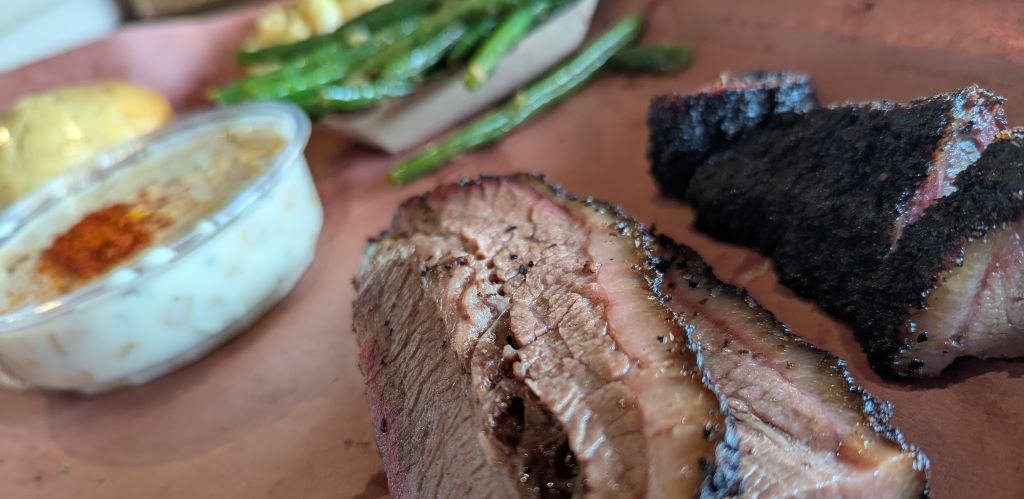
People talk about bark like it is a single magic thing, but it is really a collection of little things lining up at the right pace.
You can see it, taste it, and hear it when a knife moves through it, but the surface story starts long before the meat looks finished.
What Bark Actually Is
Bark is the result of smoke particles, seasoning, rendered fat, and dehydration working together on the outside of the meat while the inside keeps cooking.
That means you cannot chase bark by color alone. Dark does not always mean good.
What Usually Interrupts It
Too much moisture on the surface can slow the set. Wrapping too early can soften it. Weak fire control can make the surface uneven.
Most bark problems are process problems dressed up as seasoning problems.
What I Watch For
I look for a surface that has gone past wet and shiny, but not into burnt bitterness. The color matters less than the feeling that the outside finally has some confidence.